

DRONE FIGHTERS
3D Art, UX Design, Branding, 2D Illustration
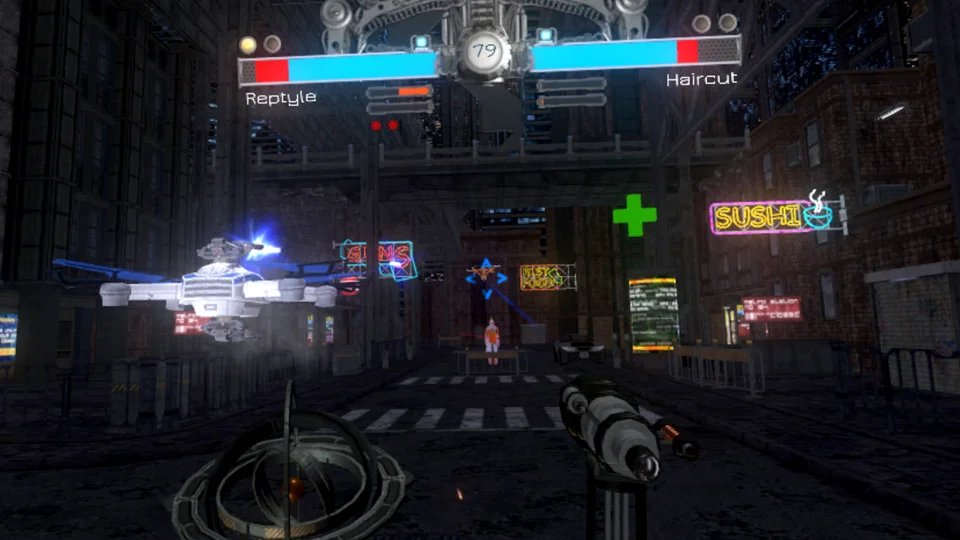
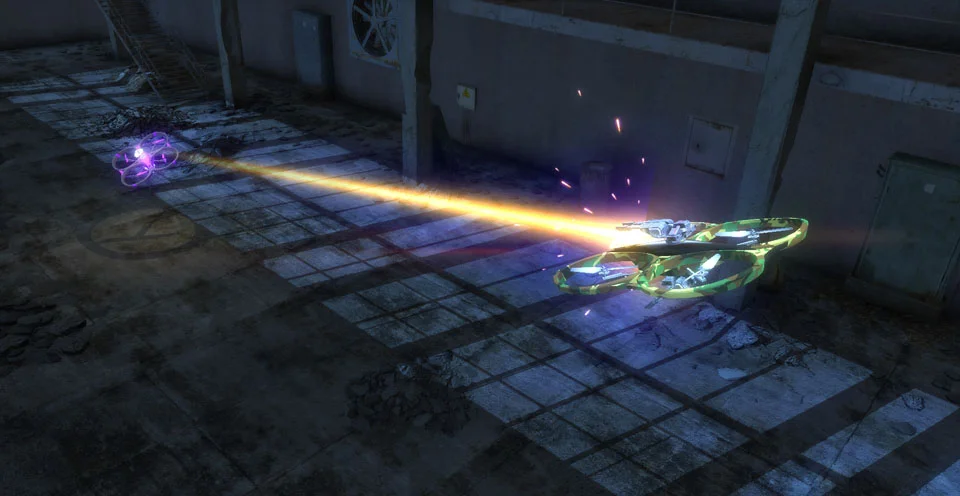
Drone Fighters is a virtual reality multiplayer game developed and published by SurrealVR. Players control their own weaponized drones in virtual 3D space and battle against other players in online matches. In Drone Fighters, the player (represented by a customizable avatar) operates a remote control drone outfitted with one of several projectile weapons made available in the game. Players engage their drones in one-on-one matches in a VR environment, with the goal of shooting down the opposing player's drone before time runs out.
For this game I designed the game's logo and animated title sequence, and I illustrated texture maps for the drone and avatar 3D models. I also consulted on the game's user experience, providing usability testing and feedback on the game's input controls. I worked alongside Lead Developer Arthur Goikhman and Lead Designer Orchun Koroglu on this project.

Optimizing for VR User Experience
Developing Drone Fighters from the ground up for virtual reality (VR) presented unique user experience opportunities and challenges, chief among them being the mitigation of motion sickness caused by headset latency. To address this early in the design phase, the team fixed the player’s avatar and the VR camera to a single location, simulating the perspective of controlling a drone from the ground. By restricting camera movement exclusively to head rotation and eliminating forward tracking, the team successfully neutralized the primary visual triggers of disorientation.
Establishing an intuitive control scheme proved more complex, as the team had to map three axes of movement, two weapon triggers, and a point-to-aim system onto the relatively new HTC Vive and Oculus Rift motion controllers. The initial prototype utilized the left-hand controller’s gyroscope to govern pitch and roll, while the directional buttons managed the yaw axis. However, internal testing revealed immediate usability friction; users instinctively attempted to use traditional directional buttons for pitch rather than the gyroscopic inputs, and wrist-based movements failed to register correctly because the system was initially calibrated to track the elbow.
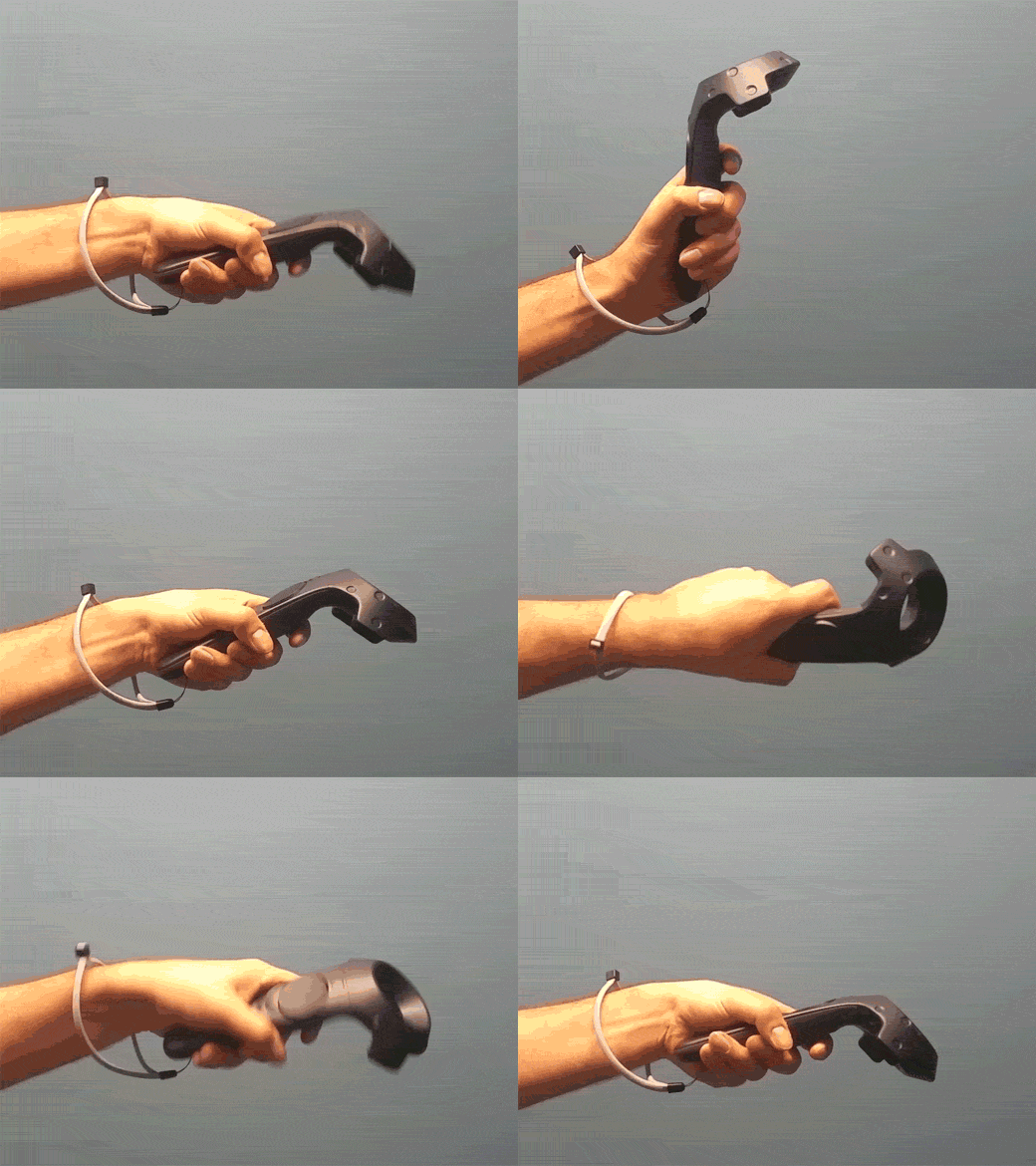
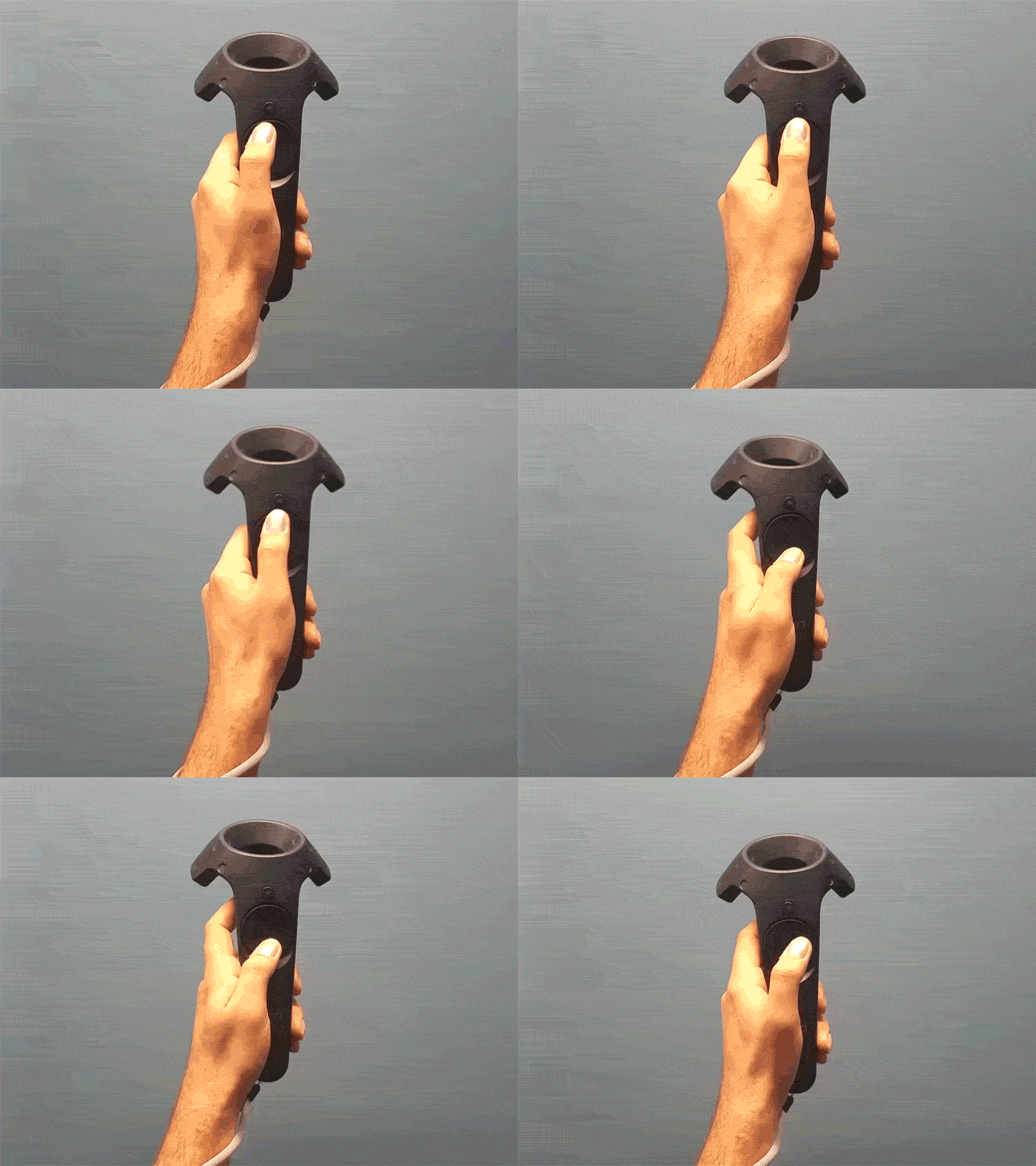
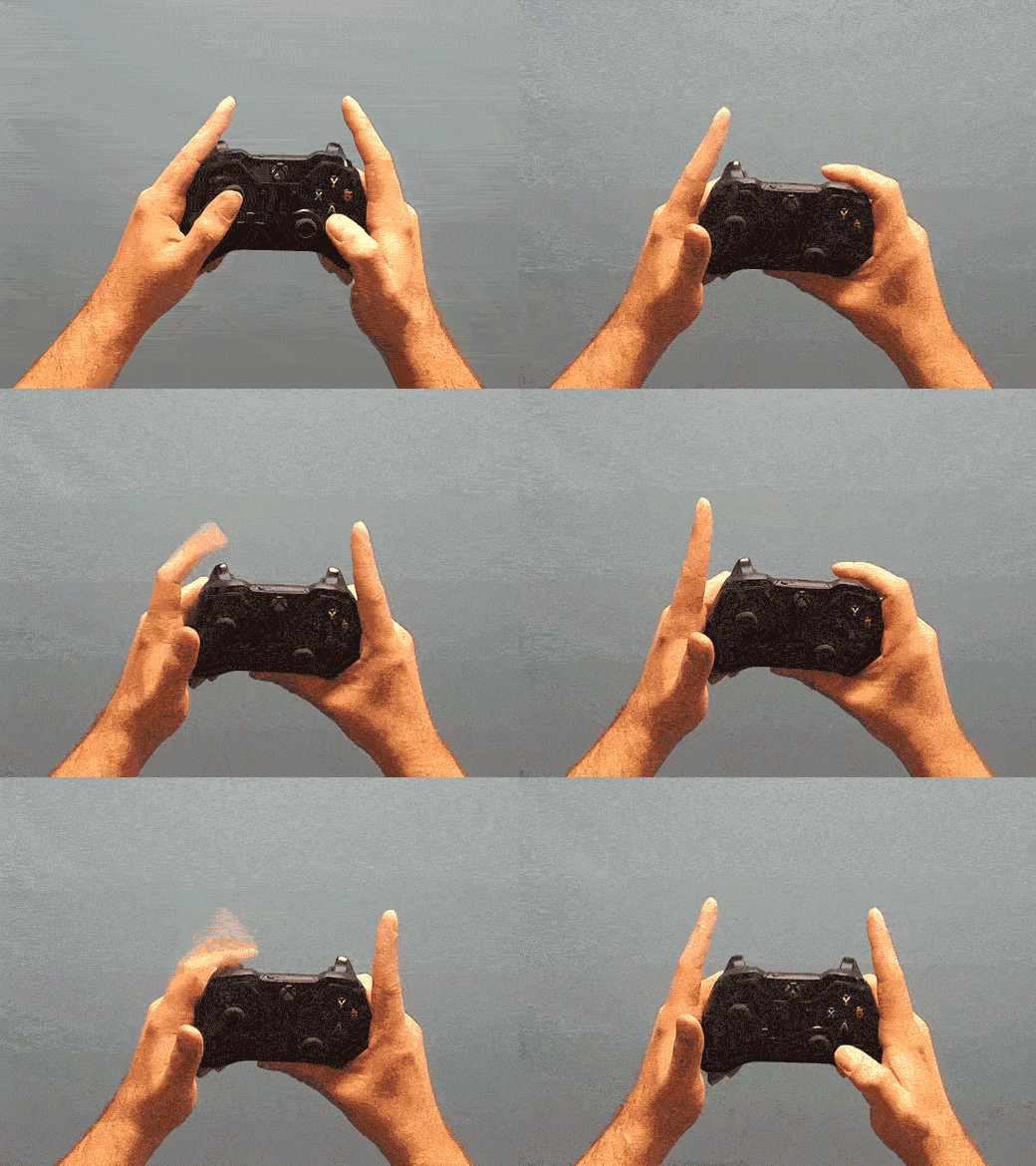
To validate these findings, the team conducted a playtest with a sample size of 20 to 30 participants, many of whom were completely new to VR. The feedback was highly polarized. While experienced gamers adapted more quickly, the gyroscopic controls yielded highly inconsistent results across the cohort due to minor variations in individual physical movements. Furthermore, several testers requested a layout mirroring a physical drone remote, separating the yaw axis to the opposite hand. These observations highlighted the need for a more reliable, button-prioritized alternative to supplement the motion-based inputs.
In response to these diverse user preferences, the development team implemented three distinct control configurations: "Arcade" mode (the original gyroscopic layout), "Mix" mode (incorporating button-mapped pitch controls), and "Drone RC Mode" (a authentic simulation layout). To streamline the learning curve, instructional demo videos were integrated directly into the settings menu. Subsequent open beta feedback was overwhelmingly positive, demonstrating that while a baseline learning curve remained, the inclusion of multiple tailored control options allowed the majority of players to find a configuration that suited their needs.

Branding, Title Sequence and Cover Art
In addition to user experience design, my responsibilities included developing the game's official logo, animating its startup title sequence, and illustrating key marketing visuals for digital storefronts. The logo design draws inspiration from classic pilot wing insignias, seamlessly integrating a quadcopter propeller ring into both the central icon and the custom typography. To align with the game's gritty environmental aesthetic, the high-fidelity renderings were finished with a brushed steel texture, while a contrasting blue and red lighting scheme was implemented to visually communicate the core 1-vs-1 competitive gameplay.
The animated title sequence was engineered as an immersive, front-facing introduction that triggers immediately upon application launch within the VR headset. To maintain user engagement without causing fatigue, the sequence remains concise and minimalist: individual components of the logo emerge from the surrounding shadows and dynamically assemble into place before the viewer. The assets were modeled and animated using Autodesk Maya, then imported into Unity, where real-time lighting, shaders, and material properties were optimized for the virtual reality environment.
Drone Texture Maps
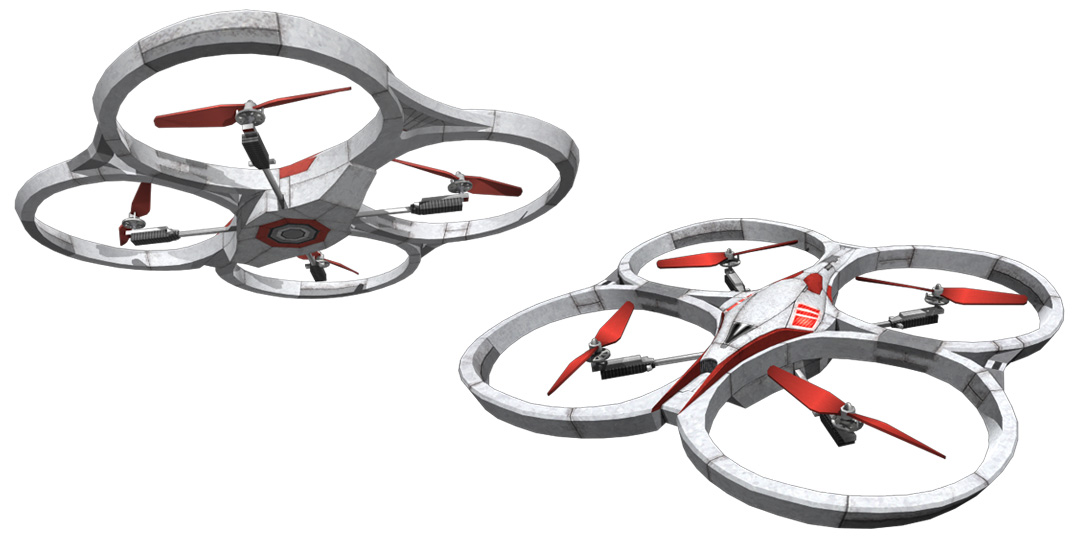
Lastly, I also contributed to some of the in-game 3D visuals as a texture artist. We already had the drone models and some simple color texture maps; it was my task to create additional, more detailed "skins" for the drones that players could unlock as they progressed.
Using the models' existing UV maps and Adobe Photoshop, I went to work designing a few different sets of texture maps for each of the four drone types. After making a quick batch of camouflage textures (including forest, snow and desert patterns), I illustrated from scratch two unique sets of sci-fi themed designs, inspired by Battlestar Galactica and Portal.


Release and Postmortem
Drone FightersVR was released on the Steam and Viveport stores. Reviews were favorable overall: most reviewers praised the fun gameplay and variety of options, while also commenting on the learning curve of the controls. To make the game more accessible and broaden its audience, we pushed an update that included a non-VR mode with a modified interface for regular PC players. We also added support for non-VR input controls, including keyboard/mouse and Windows-compatible gamepads.
A multiplayer expansion titled Arena was released on Steam later that summer. Arena added two new multiplayer modes: a battle royale-style Deathmatch mode allowing 3 or more players to fight simultaneously, and a Team Deathmatch mode allowing teams of 2 or more to battle it out. Both Drone Fighters and Arena were included in indiegala's Virtual Reality bundle, and both were ported to Sony PlayStation with PSVR support.
For more information on Drone Fighters, visit the game's Steam Store page.
All images and media © SurrealVR, Inc. Screenshots taken in VR mode with HTC Vive.